My twelve year old daughter Marina, and I left the house to a typical Oregon late fall evening. A constant steady rain punished the last of leaves that remained on the trees. We arrived at election headquarters just as early election returns were being shown on many very large screens. The room was filled with excitement and the night felt almost electric.
Marina knew that I liked politics, and she had become energized by the Kerry campaign for President, so she persuaded me to get her involved in a political campaign. Our job on election night was to deliver ballots for people who could not make make it to the polls. We awaited instruction from those who were in charge, and I got completely lost watching the election returns roll in, and I realized it was going to be a long evening. How can one not remember the buzz in that room, the electricity and how much the election really mattered. The vision that sticks with me that evening was just walking with my daughter as the cool rain lit by streetlights echoed a sound so steady and almost beautiful. I walked with my rain sprinkled daughter, just listening to her talk and being in complete awe of her interest in politics. She was beautiful in that rain sprinkled light.
But still lost in the election returns and the buzz of the room, I turned to talk to Marina I noticed she was talking to an older man whom I recognized as the Governor of Oregon. I had to let them talk. I remember just looking across a very gray room watching her talking to the Governor , like she would talk to me or a teacher at her school.
I sat and talked to Governor Kulongoski a bit later but can not remember a word that was said.
The assignment we got for that night ended up being a non entity. We picked up 10-15 ballots and the Oregon elections seemed pretty safe. With twelve close friends we viewed the returns from Ohio well into the evening. A gloom overtook the took the once festive room little by little.
The unspoken mood was a feeling of disbelief like being punched in the stomach a second time. This time the fight was not going to last weeks. It was going to be over swiftly. And maybe it was for the better. Not in the long run , but for that night only.
I still have the memory of my daughter walking house to house with me on that election night. The optimism in her eyes hinting at changing the world. She cried when she finally learned Bush had won the election. She cried warm, tired salty tears and I wiped her tears away as she fell asleep that night. I can still see that. The fall out of that election I have we have to live that every day. That may never go away.
Thursday, October 25, 2007

Saturday, October 20, 2007
Cheating on an Ethic's Exam

Beep Beep Beep
The noise rips his head war like into a semi-lucent cloud like state.
His son sleeps beside him almost angelic no, different from the day he was born.
He kind of glows in his sleep, beautiful at rest, smiling because he can.
Ben wants to stay in this world and just sleep with his son.
While aimlessly calculating how many minutes until the alarm clock rips out a part his mind, a gloom surrounded him like early morning fog where the clouds hinted at rain or just cover for the day. The thought of going to his place of employment had drained him for has long has can remember. It always lurked at the back of his mind, like the alarm clock that once again pounded his already aching head.
Suddenly the kids were up and about and house was a whirl wind of activity. Books were loudly carried down the wooden stairs and his son came pounding down the steps three stairs at a time. The house shook with chaos but on this morning he loved the smell of his house, the faint smell of a fire lit the previous night to smell of mango in his daughters hair as she bounced down the her proclaiming her self ready to go to school. Her hair glistened from the underside as this morning's early light refracted the light brilliantly, touching his eye lids perfectly, butterfly like. The simple pleasures of home, he just wanted to enjoy them. He wanted to enjoy raising his children's without the burden of parent hood and raise them with the same vigor he attached to his first baseball game as a kid.
Be he sat at his desk, mindlessly cruising the Internet, the harrowing thought of the unscheduled 11:00 meeting on his calender just crushed his mind into useless pieces. Ben had been on sudden probation ,with the company he has been with the last ten years, as they have recently deemed his work not suitable. This unexpected blatantly bad review of his job performance set him wheeling emotionally. He could feel his heart racing and weight of the world on his shoulders, like no other time in his life.
His boss walked into the room with steely, efficient resolve. His starched white shirt commanded attention. His boss described a task that must be done. This is what is required of us. We all must take an on line ethics exam. His boss paced the room like he was too busy and detached for this meeting. He described taking the exam him self just minutes before. He said he had two computer session going and he had simply looked up the answers on one session and taken the test on the other session.
"So you are asking me to cheat on an ethics exam?.
He responded curtly "No I am asking you to be more efficient".
Friday, October 12, 2007
Bikram Yoga Class One
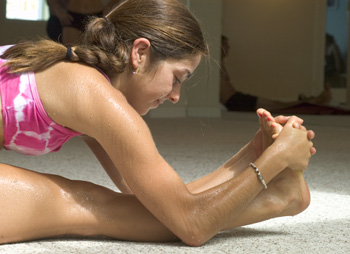
I was having a terrible time coming up with something I actually hate because life is way to short for that so while doing something I actually love I remembered something I actually hated.
I hated with a passion my first day of Bikram Yoga. Bikram Yoga is ideally practiced in a room heated to 105°F (40.5°C) with a humidity of 40%. Classes are guided by specific dialogue including 26 postures and two breathing exercises. Classes last approximately 90-minutes.
My first class I was literally dragged into class by my ex-wife as she in her infinite wisdom saw it as a path to spiritual enlightenment. Our marriage was on the rocks and I remember how deeply I wanted to make the marriage work and the over whelming feeling of self defeat that I would actually go to such a class just to make her happy. I loathed the fact that I was powerless in this rapidly declining relationship.
I walked into the studio and it immediately smelled of stale sweat. The acrid smell burned my nose hair like a smoky wood fire fueled by green wet wood. It permeated every inch of that 104 degree room. What really lit my fire on that day, was that my ex took a spot across the studio as far away as possible from me. She was the yoga expert and I was the novice left to my own devices half a room away. She had a look in her eye that has been burned into my memory for a long time. Her black tights were probably sexy to the rest of the room but what I noticed was the snarl on her face that could only be read as saying, I am in charge here.
But what I hated most was the class itself. I actually liked the calmness of the room and the instructor sounded like the morning lead on NPR. That calm smart voice that would impart wisdom and trust to the listener, the voice that would keep us listening.
What I had issue with was the routine itself. I could hold my own fitness wise and only a few weeks earlier I had completed an arduous 46 mile run around Mt. Hood. Always lurking in the back of my feeble distracted mind was the stark simple fact of what could be more difficult. This would be a walk in the park.
After about twelve minutes of class I was a clammy smelly pool of sweat struggling to perform the poses that that rest the class performed with ease. There were mirrors in the room and from every angle I could see my fellow class mates absorbed in this ritual. They seemed happy and absorbed and part of the group that I was not a part of. I felt like a clumsy out sider with sweat dripping into my eyes. The sweat burned like a purification head ache. The last beer I had last night echoed like an over played bad hit song, but i only had 78 minutes to endure. How could I be sweating from the end of nose. The sweat trickled off the end of of my nose like a leaking water faucet.
What blindsided me the most, was that I was gasping for air. It perplexed and frustrated every inch of my body. I had not moved an inch but every bend of my body in 104 degree heat robbed me of my dignity, my sense of who I was as an athletic person. The calm on the girl's face next to me irritated me like an alarm clock that goes off every five minutes as I just wanted to find peaceful slumber.
The instructor in her NPR voice, instructed me to keep my eyes open and be in the room. I desperately wanted to be anywhere but here. We went into a pose about forty minutes in that promoted the wellness of the reproductive organs of the body. My mind wandered everywhere contemplating mere survival. My watch and mind showed only 39 minutes of this madness to endure. My body disagreed. I hated being here
My mind was not in the room any more and my arms hung off my body like over cooked pasta. My spine tingled and the worst part of it was that I was breathing like I was running at a 6 mile per minute pace and I had not moved from my ugly blue sweaty yoga mat. My mind left my body for awhile aimlessly thinking where in my chaotic life had I purchased a yoga mat. And more importantly, why did i purchase this instrument of pain and humiliation.
This was my first class and i had been thrust into this moment and i had no idea when class would end. I was completely at the will of the instructor and this drove me crazy as she could instruct this pain forever. I remember thinking how much I loathed this minute in my life and hating the fact that the last 90 or so minutes hurt more than I wanted anything to hurt both physically and spiritually.
I remembered this at the same yoga class today as I talked to first time students students going through the same enigma I went through years ago...
Thursday, October 11, 2007
Waiting
Waiting and not knowing
I am constantly being reminded that I should be doing something else but for some ingrained reason I put off everything else and just wait. I abhor the fact that I put all my limited time and energy into waiting. I sit at a coffee shop mindlessly reading the paper I picked up in anticipation of he fact that I would be waiting never ever factoring into the equation that I had arrived fifteen minutes before we were supposed to meet. So I sit and wait and hate the fact that I sitting here waiting.
I am constantly being reminded that I should be doing something else but for some ingrained reason I put off everything else and just wait. I abhor the fact that I put all my limited time and energy into waiting. I sit at a coffee shop mindlessly reading the paper I picked up in anticipation of he fact that I would be waiting never ever factoring into the equation that I had arrived fifteen minutes before we were supposed to meet. So I sit and wait and hate the fact that I sitting here waiting.
Wednesday, October 10, 2007
Hippo O Cracity
I hate hypocrisy and that is a bit hypocritical of me as I know somewhere along the line I probably have been guilty of it so somewhere deep in side of me may not be all that happy with myself.
About six months ago I had the mundane chore of taking an on line ethics exam at my place of work and of course in my line of work every single minute is about contributing to the bottom line. You know what they say , "Time is Money" and in that sentence it brings me back to two other things I really do not like cliches and the motive of profit in every single thing we do in everyday life. But that being said I still had to take the ethics exam in order to fulfill my place in the Corporate World which reminded me why I loathe the banal cubicle existence and just going through the motions of what is expected, so I sat down and talked to my boss about priorities, which is something that I hate more than drywalling.
About six months ago I had the mundane chore of taking an on line ethics exam at my place of work and of course in my line of work every single minute is about contributing to the bottom line. You know what they say , "Time is Money" and in that sentence it brings me back to two other things I really do not like cliches and the motive of profit in every single thing we do in everyday life. But that being said I still had to take the ethics exam in order to fulfill my place in the Corporate World which reminded me why I loathe the banal cubicle existence and just going through the motions of what is expected, so I sat down and talked to my boss about priorities, which is something that I hate more than drywalling.
Dot Com Indians
I hate the fact that I don't like dot.com Indians. I also must admit that every single dot.com Indian that I have met and worked with are the kindest people you would ever meet. For those not effected by the mass out sourcing of hi -tech jobs in America I should take second to define dot.com Indians...
They are gentle a, kind hearted group of people from India who fill our suburbs, shop in our stores who have been trained from the minute they have set foot on this good earth to program computers faster and more efficiently than we here in the bloated United States can compete with. I admire every single one of them and loathe them in the same breath. To a man, and in a rare case a woman, they look like the rest of us ignoring the fact that the porn mustache went out of fashion in the late eighties.
They walk our streets critiquing our India restaurants that we have come to love and savior and cling to with passion that American Urban sprawl that we as enlightened Americans have have evolved to detest. I hate the fact that they have become the Americans we used to be.
They are gentle a, kind hearted group of people from India who fill our suburbs, shop in our stores who have been trained from the minute they have set foot on this good earth to program computers faster and more efficiently than we here in the bloated United States can compete with. I admire every single one of them and loathe them in the same breath. To a man, and in a rare case a woman, they look like the rest of us ignoring the fact that the porn mustache went out of fashion in the late eighties.
They walk our streets critiquing our India restaurants that we have come to love and savior and cling to with passion that American Urban sprawl that we as enlightened Americans have have evolved to detest. I hate the fact that they have become the Americans we used to be.
Friday, October 5, 2007
Loretta and Mick


========================
Loretta and Mick were driving down a lonely highway one winter night. The car hit something, making a loud noise. Loretta and Mick bickered about whether he was driving drunk or not, then they got out to see what was hit. They peered into the darkness, seeing nothing.
Rewrite this episode, showing what happens. You should stick to these events and stick to the start and end point, but you may add in anything you like. Turn this into a scene that unfolds moment by moment. It will probably include some dialogue. Also strive to include descriptions that are specific and sensory.
Keep it short, preferably under 500 words.
=========================
For Mick, driving was a necessary evil and he always viewed it as a banal chore he had to do in order to get from point A to point B. Driving an automobile was something he had never really mastered and driving tonight seemed like a chore he really didn't want to tackle. He could feel the anger rising up within him as he turned the radio to a station that he knew that Loretta would detest. But what made him even more vehement was that she just slept right through his futile passive aggressive attempts of re-starting the argument they have had an hour earlier. Her sleep was deep and quiet without a hint of anger; it was almost peaceful. This somehow made him angrier as he could feel the night creeping in on him, the deafening sound of absolute silence.
Usually he would enjoy a drive such as this, as a crescent moon had risen in his his rear view mirror but at this time of night and his unexpected agitated state it rudely reminded him that it was very late at night. He felt more alone than he had in a long time as the weight of their crumbling relationship inched into the front right seat beside him, uninvited and rather unexpected. The silence returned again only louder.
He hated driving, but driving in Delaware was a serious problem for especially on a night like this. Everything looked the same in the day light with sorry, unnamed chicken coops lining every road and like the settlers of old only the sunrise and sunset to give a true sense of direction. Tonight he had neither, and had to settle for road signs that headed him toward the town of Seaford.
He approached a blinking light that he could see for minutes at a time and out of the corner of his eye he could hear a dull, thick crunch and wobble of his driver side left wheel. What raced uncomfortably through his mind was what could he possibly have hit in the middle of nowhere? For some reason, he turned on the radio station that Loretta hated and went out an looked for carnage on the road almost half wanting to find it face up dead and twisted so that his imagination had not won.
Three miles from home. the crescent moon hung lazily above him and Loretta emerged almost ghost like into a silent darkness that could not be broken. A salty gentle wind off the bay caught his attention as it felt like it was going to rain soon. The clear moon hinted no, but tonight it wasn't about instinct but merely survival. Mick mumbled, I think I hit something. His words were unusually crisp and dry.
Mick recognized the rising in her left eyebrow in the subtle light as a look of disbelief he had known all too well. He had an overwhelming feeling of being starkly alone as she slid into the car as she insisted that she should drive.
Tuesday, October 2, 2007
Cut and Paste from Lecture 2 (For readibility purposes)

There is a piece of writing wisdom that you will most likely hear preached in every writing class you ever take. And well you should because it is a cornerstone of good creative writing. So let’s just get this wisdom out of the way right now. Here it is:
Show, don’t tell.
Here’s the difference. To tell means to relate something in a factual way that is somewhat detached. To show means to render the experience, to physically take the reader inside what’s being written about.
This is telling:
This is telling:
The bank was robbed by two men wearing masks. Both of them carried firearms, and it seemed as if they were willing to shoot if anyone caused trouble for them. Everyone there was absolutely terrified, none more so than the guard who had a gun pressed against him.
This is showing:
And then the tellers stopped what they were doing, and the customers slowly turned, and silence came over the bank. Two men wearing black ski masks and blue business suits were standing to the side of the door. One of them had a pistol pressed against the guard’s neck. The guard’s eyes were closed, and his lips were moving. The other man had a sawed-off shotgun. "Keep your big mouth shut!" the man with the pistol said, though no one had spoken a word.
See the difference?
The latter passage is from Tobias Wolff’s short story “Bullet in the Brain.” The first passage isn’t badly written, but it’s also not all that compelling. We get the facts, but little else. The second passage puts us right there, on the scene. In the scene. We see the bank tellers stop and we see everyone turn and we hear the silence descend. We see what the robbers are wearing and what kind of guns they carry. It’s one thing to be told the robbers mean business; it’s another to hear the threatening words spoken. It’s one thing to be told the guard was terrified; it’s another to see his closed eyes and moving lips. Showing makes your writing more vivid and immediate.
More alive.
And here’s the thing. When you press yourself to show rather than tell, it forces you to pull out and apply that precious OIL—observation, imagination, and language.
So, how do you do this? How do you show? By employing three key tactics, which we will now explore.
The latter passage is from Tobias Wolff’s short story “Bullet in the Brain.” The first passage isn’t badly written, but it’s also not all that compelling. We get the facts, but little else. The second passage puts us right there, on the scene. In the scene. We see the bank tellers stop and we see everyone turn and we hear the silence descend. We see what the robbers are wearing and what kind of guns they carry. It’s one thing to be told the robbers mean business; it’s another to hear the threatening words spoken. It’s one thing to be told the guard was terrified; it’s another to see his closed eyes and moving lips. Showing makes your writing more vivid and immediate.
More alive.
And here’s the thing. When you press yourself to show rather than tell, it forces you to pull out and apply that precious OIL—observation, imagination, and language.
So, how do you do this? How do you show? By employing three key tactics, which we will now explore.
One way to show—to take the reader physically inside the writing—is to get specific with what you’re saying. Specificity takes you from a roughly rendered sketch to a nicely detailed painting. You could, for example, write:
The man was tall.
We get the fact that the man is tall but we don’t have a real sense of his tallness. Now look at these variations:
The man towered over me.
The man was six foot seven.
The man seemed tall as a tree.
All of these do the job better. It’s just a matter of getting more specific with this fellow’s tallness, pushing beyond the mere facts, or even getting more specific with the facts. (Some of you may have noticed that the first example—the man was tall—is the only one that relies totally on a modifier. Remember, modifiers often aren’t the best way to get your point across.)
Sometimes you can show better simply by getting more specific with the names you give to things. For example, you could write:
Sometimes you can show better simply by getting more specific with the names you give to things. For example, you could write:
The car drove away.
But we’ll see it better if you get more specific with that car. Like so:
The Cadillac drove away
The cherry-red sports car drove away.
The rusty wreck of a car drove away.
Here it’s just a matter of choosing a more specific noun and, in the second two cases, adding a good modifier. It’s a matter of finding better words. While we’re at it, you could also get more specific with that verb drove. Like so:
The rusty wreck of a car sputtered away.
Isn’t that miles better than this?
The car drove away.
Specificity also means finding the specific details that best bring the painting to life. Let’s say you describe an apartment like so:
The place was decorated in a style that can only be described as tacky.
It’s a good start, but we really don’t know very much. We can’t see the place. Yes, we know it’s tacky but we don’t know what’s tacky about it. What we need are some specific details.
Now take a look at this apartment, described in Junot Diaz’s short story “Fiesta”:
Now take a look at this apartment, described in Junot Diaz’s short story “Fiesta”:
The place had been furnished in Contemporary Dominican Tacky. The less I saw, the better. I mean, I liked plastic sofa covers but damn, Tio and Tia had taken it to another level. They had a disco ball hanging in the living room and the type of stucco ceilings that looked like stalactite heaven. The sofas all had golden tassels dangling from their edges.
Now we see it. What’s tacky about the place? The plastic sofa covers, the golden tassels, the stucco ceilings that resemble stalactite, and let’s not leave out the disco ball. What kind of tacky is it? Contemporary Dominican!
Look at the specificity in this description of a person from Charles Frazier’s novel Cold Mountain:
Look at the specificity in this description of a person from Charles Frazier’s novel Cold Mountain:
Shortly the walker came around the bend. He went hatless and wore a long grey coat with flapping skirts and carried a lumpish leather knapsack and a walking staff as tall as he was. He strode along, head down, marking his pace with the staff like some mendicant friar from days of yore.
We see exactly what this fellow is wearing and we see exactly how he is walking. The specificity makes us see him, really see him.
Specificity doesn’t just apply to describing people, places, and objects. You can even get specific with describing things that are more abstract, such as emotions. For example, you could write:
Specificity doesn’t just apply to describing people, places, and objects. You can even get specific with describing things that are more abstract, such as emotions. For example, you could write:
I was afraid of death.
Or you could get more specific with that fear, as demonstrated in this passage from Lucy Grealy’s memoir Autobiography of a Face:
No one had any idea, not my parents or teachers or friends, because there was no way I could discuss it. If the word death was even mentioned in my presence, I would collapse. At night I dreamed of being carted off and left alone in a dark, cold room filled with bones, bones that would wake up once I was in there and dance around me.
Not only does specificity help show, but it can make just about anything seem interesting. Look at this hyper-specific description of a cap in John Steinbeck’s travel memoir Travels With Charley:
My cap was one I have worn for many years, a blue serge British naval cap with a short visor and on its peak the royal lion and unicorn, as always fighting for the crown of England. This cap is pretty ratty and salt-crusted, but it was given me by the skipper of a motor torpedo on which I sailed out of Dover during the war—a gentle gentleman and a murderer.
Through sheer specificity, this cap is turned into something that holds our attention.
- Go out and find an object that fascinates you. It can be something small as a pebble or large as a skyscraper. Describe it with great specificity. Convey everything about it.
- Think of favorite possession—a cap, car, quilt, ship in a bottle. Anything will do. Describe it with great specificity. Convey everything about it.
- Take this sentence: Everyone at the soiree looked incredibly elegant. Rewrite this sentence, getting much more specific, and it’s fine if you use more than one sentence.
Another way to show is to use sensory detail, meaning you describe things in such a way that appeals to the senses. We experience the world largely through our five senses—sight, sound, smell, touch, taste. And so it naturally follows that if you appeal to the reader’s senses this will help pull the reader into your writing in a physical way. This is what the novelist E.L. Doctorow means when he says, “Good writing is supposed to evoke sensation in the reader; not the fact that it is raining, but the feeling of being rained upon."
Our eyes lead the way when experiencing the world so you will spend more time describing what is seen than you will with the other senses. Whenever you are describing something of a physical nature, do your best to let your reader see it. But keep a lookout for appropriate places to include the other senses, as well. Often those other senses will pull the reader even more deeply into the world you are creating.
Let’s look at some passages that do a good job appealing to the senses.
Sight, from Tim O’Brien’s short story “The Things They Carried”:
Our eyes lead the way when experiencing the world so you will spend more time describing what is seen than you will with the other senses. Whenever you are describing something of a physical nature, do your best to let your reader see it. But keep a lookout for appropriate places to include the other senses, as well. Often those other senses will pull the reader even more deeply into the world you are creating.
Let’s look at some passages that do a good job appealing to the senses.
Sight, from Tim O’Brien’s short story “The Things They Carried”:
Lieutenant Jimmy Cross crouched at the bottom of the foxhole and burned Martha’s letters. Then he burned the two photographs. There was a steady rain falling, which made it difficult, but he used heat tabs and Sterno to build a small fire, screening it with his body, holding the photographs over the tight blue flame with the tips of his fingers.
Sound, from Adam Gopnik’s essay, “Distant Errors”:
The next morning, at six forty-six, I was just awakened by the sound of the gentlest possible knocking on the front door—so butterfly quiet that at first I imagined that it must have been Luke stirring in bed. But then there it was again, quiet but insistent.
Smell, from Annie Proulx’s short story “Brokeback Mountain”:
The room stank of semen and smoke and sweat and whiskey, of old carpet and sour hay, saddle leather, shit and cheap soap.
Touch: from Jack Finney’s time travel novel Time and Again:
The wind was much stiffer now, the temperature sharply lower and still dropping, I thought. It was snowing again but now it was a hard pelletlike snow, nicking into my face with the wind, gritty underfoot.
Note that touch can also apply to the way something feels. For example, the low temperature in the above passage is felt, without being actually touched.
Taste, from Anthony Bourdain’s memoir Kitchen Confidential:
Taste, from Anthony Bourdain’s memoir Kitchen Confidential:
I took it in my hand, tilted the shell back into my mouth as instructed by the now beaming Monsieur Saint-Jour and with one bite and a slurp, wolfed it down. It tasted of seawater... of brine and flesh... and somehow... of the future.
Sensory details aren’t always conveyed in isolation, though. They can blend together, creating a dimensional sensory environment not unlike the “living” playroom in Ray Bradbury’s story “The Veldt.” See how several senses blend together in this passage from Azar Nafisi’s memoir Reading Lolita in Tehran:
It was not just the very loud noise—if one could call it a noise—of the explosion: more than the sound, we felt the explosion, like the fall of a massive weight on the house. The house shook, and the glass trembled in the window frames. After this last explosion, I got up and went upstairs to the terrace. The sky was blue and pink, the mountains capped with snow; at a distance the smoke curled upwards from the fire where the missile had launched.
And look at how various senses blend in this passage from Frances Mayes’s travel memoir Under the Tuscan Sun:
The trunk of his miniscule Fiat is filled with black grapes that have warmed all morning in the sun. I’m stopped by the winy, musty violet scents. He offers me one. The hot sweetness breaks open in my mouth. I have never tasted anything so essential in my life as this grape on this morning. They even smell purple.
You’ll notice that each of these passages is abetted by being specific about the sensory information given.
A great way to engage the senses is to use metaphors and similes. These two literary devices let you compare one thing to another. So, instead of writing:
The kid was skinny.
You can use a metaphor:
The kid was a toothpick.
Or a simile:
The kid was skinny as a toothpick.
Similes make their comparisons using like or as. Metaphors take a little poetic license, skipping the like or as.
The comparison to a toothpick isn’t all that groundbreaking, but it’s better than simply saying: The kid was skinny. The word toothpick gives us a strong visual to go with the kid. Whenever that kid appears, we will see a toothpick. That’s the magic of metaphors and similes.
Metaphors and similes are also a good way to get away from relying on modifiers. Let’s say you want to convey:
The comparison to a toothpick isn’t all that groundbreaking, but it’s better than simply saying: The kid was skinny. The word toothpick gives us a strong visual to go with the kid. Whenever that kid appears, we will see a toothpick. That’s the magic of metaphors and similes.
Metaphors and similes are also a good way to get away from relying on modifiers. Let’s say you want to convey:
The woman was beautiful.
Here you’re relying solely on that modifier beautiful, which is one of the most vague words in the language. You could improve the description by finding a better modifier, like so:
The woman was drop-dead gorgeous.
A little better. But still we don’t have that clear an image of this woman’s beauty. So we can bring in a comparison to paint a better picture.
The woman was a Botticelli painting.
The woman looked like a Botticelli painting.
The woman looked as if she had stepped out of a Botticelli painting.
Even if we don’t exactly know that Botticelli was a painter from the Italian Renaissance, we get the idea that this woman has a classical kind of beauty, perhaps porcelain skin and delicate features. The description is made both more sensory and more specific.
Comparisons can even link a sensory image to an emotion, making the emotion felt all the more strongly. Like so:
Comparisons can even link a sensory image to an emotion, making the emotion felt all the more strongly. Like so:
Her words carved something out of my insides, leaving me mutilated.
It was as if her words carved something out of my insides, leaving me mutilated.
How do you know which to use: metaphor or simile? There is no rule about this. The metaphor feels a bit more poetic and bold because it’s making such a leap. The simile eases you into the comparison a bit more. You should use both in your writing, but perhaps you should be a little more sparing with your metaphors.
------------------------------
--Start Here
-----------------------------
And you should have fun with your metaphors and similes. Be creative, go out on a limb and see what you come up with. You’ll probably know if you have gone too far, as Steve Martin does (intentionally) in this sentence from his short story “Drivel”:
------------------------------
--Start Here
-----------------------------
And you should have fun with your metaphors and similes. Be creative, go out on a limb and see what you come up with. You’ll probably know if you have gone too far, as Steve Martin does (intentionally) in this sentence from his short story “Drivel”:
The snap of the condom going on echoed through the apartment like Lawrence of Arabia’s spear landing on an Arab shield.
- Few things appeal to the senses more than food. Describe a memorable meal you have had capturing the sensory experience of it. Use at least three senses in the description.
- Describe a person moving through a pitch-black cave. Bring that cave to life so a reader would feel like he or she was really there. But...since the cave is pitch-black, you will not be able to rely on the sense of sight. Use some or all of the other senses.
- Come up with a metaphor or simile that describes each of the following: one of your parents, the town or city in which you live, how you felt this past Christmas.
Finally, there are scenes. When you create a “scene,” you move beyond just showing through the power of description. You show by letting readers experience events as if they were unfolding right before them, much like watching a scene in a movie or a play. Scenes let readers see people walk across the page, talk to each other, fight, seduce, cook, coax, whatever you want to show them doing. In short, a scene reveals action.
To make a scene, you simply slow things down and show what’s happening moment by moment.
In this scene from F. Scott Fitzgerald’s novel The Great Gatsby, the millionaire Jay Gatsby is showing off his wardrobe to his long-lost lover Daisy:
To make a scene, you simply slow things down and show what’s happening moment by moment.
In this scene from F. Scott Fitzgerald’s novel The Great Gatsby, the millionaire Jay Gatsby is showing off his wardrobe to his long-lost lover Daisy:
Recovering himself in a minute he opened for us two hulking patent cabinets which held his massed suits and dressing gowns and ties, and his shirts piled like bricks in stacks a dozen high.
"I’ve got a man in England who buys me clothes. He sends over a selection of things at the beginning of each season, spring and fall.”
He took out a pile of shirts and began throwing them one by one before us, shirts of sheer linen and thick silk and fine flannel which lost their folds as they fell and covered the table in many-colored disarray. While we admired he brought more and the soft, rich heap mounted higher—shirts with stripes and scrolls and plaids in coral and apple green and lavender and faint orange with monograms of Indian blue. Suddenly with a strained sound Daisy bent her head into the shirts and began to cry stormily.
"They’re such beautiful shirts," she sobbed, her voice muffled in the thick folds. "It makes me sad because I’ve never seen such—such beautiful shirts before."
Notice that the descriptions are specific and sensory—you can see those stunning colors and almost feel the richness of the fabrics. But there’s something else here, too. We see the action unfold moment by moment, as if we are right there. That’s what makes it a scene. You’ll also notice that dialogue is included. Dialogue is a key component of most scenes. If there is conversation happening, a scene usually lets us hear the actual words that people say.
In fact, some scenes are composed mostly of dialogue. That’s the case in this scene that shows an awkward conversation between a father and his teenage son in Homer Hickham’s memoir Rocket Boys:
In fact, some scenes are composed mostly of dialogue. That’s the case in this scene that shows an awkward conversation between a father and his teenage son in Homer Hickham’s memoir Rocket Boys:
Dad flicked imaginary lint off my bed and looked up at the ceiling. He cleared his throat. “Sonny,” he said finally, “what do you know about life?”
I didn’t know what he meant. “Not much, I guess."”
“I’m talking about... girls.”
“Oh.”
“You haven’t ever...”
I flushed. “Oh, no, sir.”
Dad focused on one of my model airplanes on my dresser. “I wouldn’t tell anybody else about being in Geneva Eggers’s house. She has sort of a business going there. Some of the bachelor miners—she’s sort of their girlfriend.”
I didn’t understand. “Which one?”
Dad winced. “More than one... a lot of them. The occasional married man too.”
My eyes widened, and I’m sure my mouth dropped open. I understood now.
Here we get a few physical actions mixed in with the dialogue, to let us see what the characters are doing, but mostly we experience the scene by listening to what these people are saying. And we’re able to follow things perfectly well this way.
In real life, a conversation like this might cover twenty minutes or so, but the written version, though real-sounding, is much more condensed than that. That’s the trick with dialogue; you need to get to the point quickly, rendering conversation that feels natural while moving along at a good pace, revealing a lot of information in a short amount of space.
You also want to make it clear who is speaking when. The simplest way to do this is with tags—he said, she replied, etc. Don’t get too fancy with these, though. It’s fine if you nothing else but said as a tag. It becomes invisible, just a marker to indicate who is speaking. Instead of tags, you can also link a physical action to the dialogue to indicate who is speaking, a technique that’s used in the above example. And it’s even okay if some lines of dialogue just stand on their own. But right now don’t get too bogged down with these technical matters. Just know that dialogue is often a good way to bring your scenes to life.
But you don’t have to have dialogue to make a scene. People aren’t always talking. That’s true in this passage from Ian Frazier’s long feature article “Hog Wild,” in which the author spots a wild hog:
In real life, a conversation like this might cover twenty minutes or so, but the written version, though real-sounding, is much more condensed than that. That’s the trick with dialogue; you need to get to the point quickly, rendering conversation that feels natural while moving along at a good pace, revealing a lot of information in a short amount of space.
You also want to make it clear who is speaking when. The simplest way to do this is with tags—he said, she replied, etc. Don’t get too fancy with these, though. It’s fine if you nothing else but said as a tag. It becomes invisible, just a marker to indicate who is speaking. Instead of tags, you can also link a physical action to the dialogue to indicate who is speaking, a technique that’s used in the above example. And it’s even okay if some lines of dialogue just stand on their own. But right now don’t get too bogged down with these technical matters. Just know that dialogue is often a good way to bring your scenes to life.
But you don’t have to have dialogue to make a scene. People aren’t always talking. That’s true in this passage from Ian Frazier’s long feature article “Hog Wild,” in which the author spots a wild hog:
After we’d gone about a hundred steps beyond the spot where the deer had emerged, Robbie turned back to look again. Immediately, he went to one knee, and gestured to me to get down. I crouched, and saw what he’d seen. A hog, in dark silhouette, came out of the pines exactly where the deer had been. The spring green of the long grass behind him made his swamp-mud-black color stand out. Robbie brought the gun to his shoulder. A second ahead of him, the hog reversed ends balletically, his feet seeming not to touch the ground, and disappeared back into the pines.
Even though no words are spoken, we are still following the action moment by moment. We feel as if we are there. And that’s the key to writing a scene. Pretend you are right there and show us what’s going on, moment by moment.
There are times, however, when a scene is not called for. Times when, in fact, it may be more appropriate to actually tell something rather than show it.
For example, sometimes it’s better to summarize a situation, to give a general overview, rather than breaking the situation down into a scene. You’ll use this when you want to get from A to B in a quick and expedient manner, saving your scenes for the juicy parts. That’s what’s happening in this passage from James Baldwin’s short story “Sonny’s Blues”:
For example, sometimes it’s better to summarize a situation, to give a general overview, rather than breaking the situation down into a scene. You’ll use this when you want to get from A to B in a quick and expedient manner, saving your scenes for the juicy parts. That’s what’s happening in this passage from James Baldwin’s short story “Sonny’s Blues”:
At first, Isabel would write me, saying how nice it was that Sonny was so serious about his music and how, as soon as he came in from school, or wherever he had been when he was supposed to be at school, he went straight to that piano and stayed there until suppertime. And, after supper, he went back to that piano and stayed there until everybody went to bed. He was at the piano all day Saturday and all day Sunday. Then he brought a record player and started playing records. He’d play one record over and over again, all day long sometimes, and he’d improvised along with it on the piano.
And sometimes your main purpose is simply to relay information, in which case telling is fine. That’s what’s happening in this passage from John Berendt’s nonfiction book, Midnight in the Garden of Good and Evil:
I suspected that in Savannah I had stumbled on a rare vestige of the Old South. It seemed to me that Savannah was in some respects as remote as Pitcairn Island, that tiny rock in the middle of the Pacific where the descendants of the mutineers of the H.M.S. Bounty had lived in inbred isolation since the eighteenth century. For about the same length of time, seven generations of Savannahians had been marooned in their hushed and secluded bower of a city on the Georgia coast.
On those occasions when you choose to tell rather than show, just try to do your telling with as much clarity and eloquence as possible. And even when you’re telling, you can still employ a degree of specificity and perhaps even sensory detail.
Also, don’t break into a cold sweat over whether you should be telling or showing. Often it’s a fine line between them and, besides, you shouldn’t break into a cold sweat over any of this. Not yet. This is supposed to be fun, remember? But whenever you’re going over a section of your writing you can always ask yourself: Should this be more specific? More sensory? More of a scene?
Also, don’t break into a cold sweat over whether you should be telling or showing. Often it’s a fine line between them and, besides, you shouldn’t break into a cold sweat over any of this. Not yet. This is supposed to be fun, remember? But whenever you’re going over a section of your writing you can always ask yourself: Should this be more specific? More sensory? More of a scene?
- Write a scene that shows an encounter you actually had today. Preferably there will be dialogue involved. If it’s still early in the day, feel free to use yesterday.
- Write a scene that illustrates this: Max and Janine made a terrible couple. Don’t ever tell us that they are a terrible couple, or anything like that. Show it through what they say and do.
- Write a scene about a person doing some household task—sharpening a pencil, cleaning the bathroom, mowing the lawn, etc. Don’t use any dialogue, but make it a scene. If you want to make it interesting, throw an obstacle or two in that person’s way.
Subscribe to:
Posts (Atom)